Archive

‘Street Art’ Category

November 19th, 2012

eatart

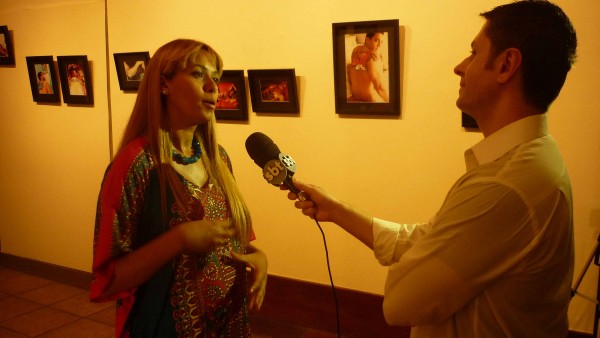
Anarkia is turning stereotypes upside down again. Graffiti is traditionally a man’s game: dirty, dangerous, competitive. Girl graffiti writers few and far between: accepted by the boys, provided they play by the rules.


Google images for ‘graffiti boys’ and you will find plenty of images of graffiti, or boys doing graffiti. Google ‘graffiti girls’? You will find hundreds of images of girls covered in graffiti. Done by boys.

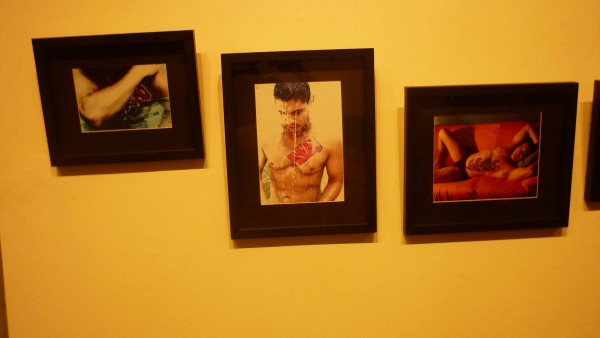
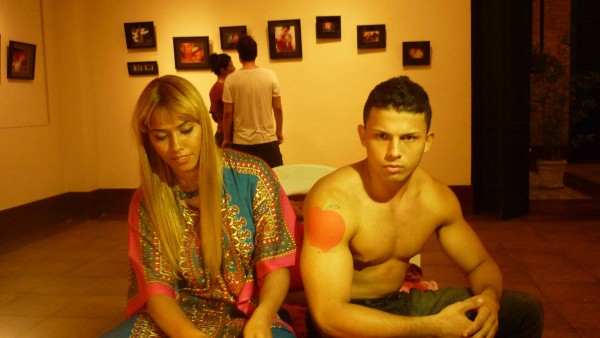
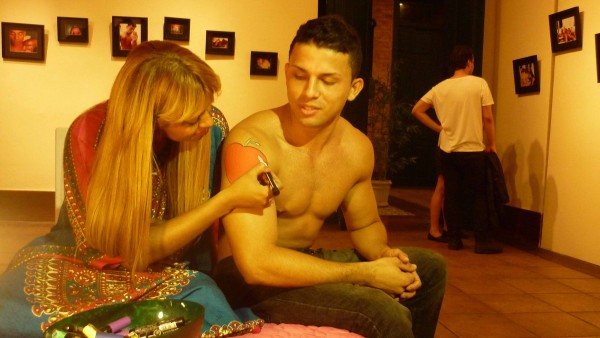
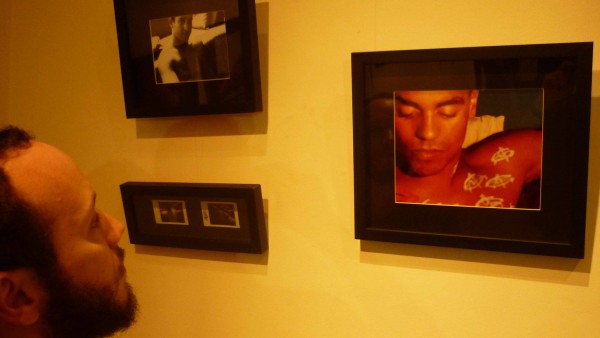
In her eatart exhibition, Anarkia reverses the game, exhibiting pieces elaborated on a series of compliant male bodies. Swapping the walls of the city for walls of living skin, she asks questions about modern gender roles.

Just who is consuming whom, exactly?

October 19th, 2012

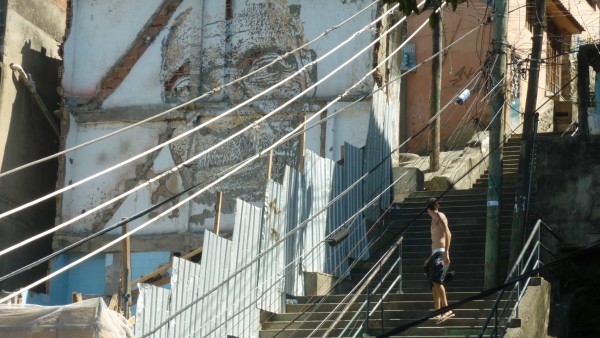
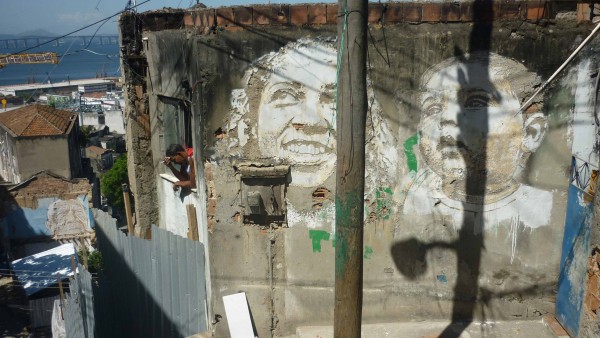
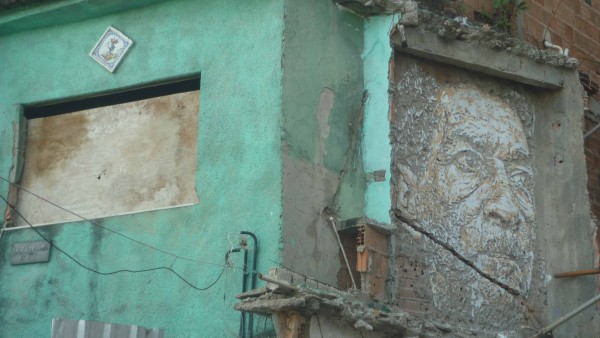
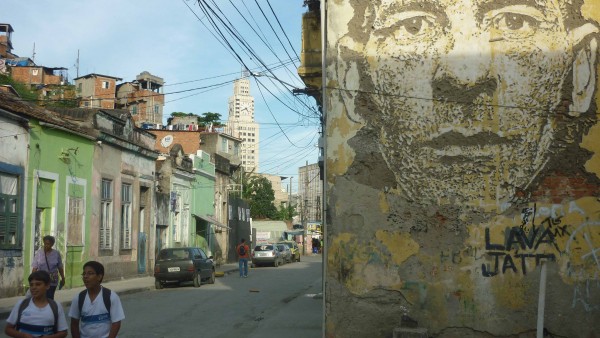
Vhils in Providência

“When I work I build a relationship with space and people. I’ve been working here in Providência for 3 weeks.”

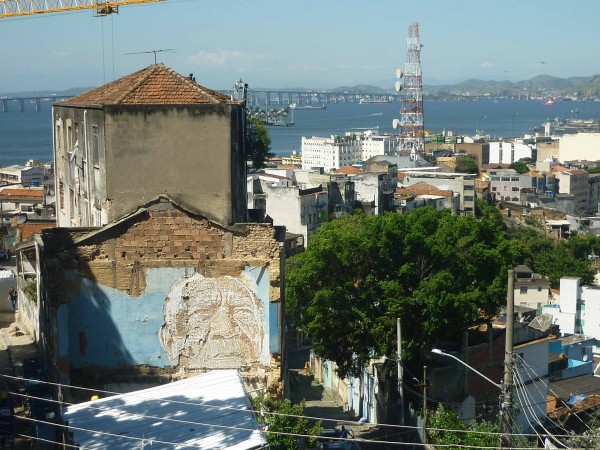
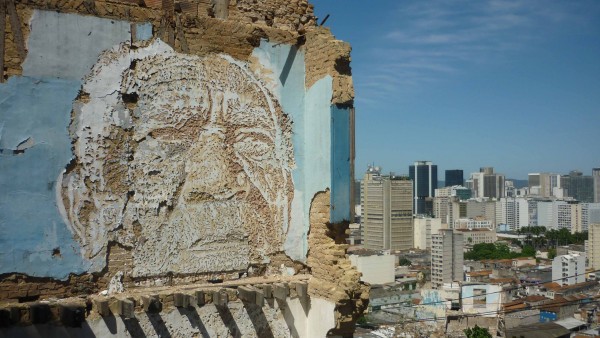
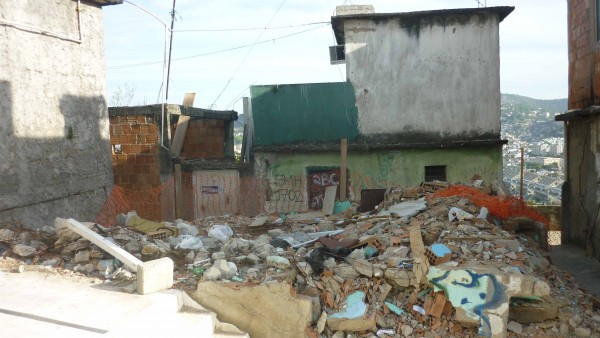
In October 2012 I meet Portuguese artist Vhils in Providênca. The first favela in the world is now the centre of Rio’s “Big Leap Forward”. I haven’t been here for months, and I can’t believe my eyes. The praça, always centre of social life in the favela, is now a dystopian twenty four hour building site. An enormous pillar, a support for Rio’s latest cable car project, has replaced what used to be the sports court. This was where everyone met, where parties took place and where children played. It’s development at breakneck speed, and as usual, favela residents appear to have been granted antlike status in the process. It is a timely moment for Vhils to chisel his moving portraits of residents into the rapidly disappearing walls.


Vhils says:

“Between 1920 and 1974 Portugal lived the Salazar dictatorship. At the end of this the country swung to the left. Growing up, the first art I saw in the street was fading, decrepit murals painted by supporters of the socialists. In the years after Portugal joined the European union in 1986 there was a capitalist boom. Now two competing visual languages covered public walls. Billboards encouraging consumerism surrounded the political murals.  Much of the advertising was illegal. Then graffiti began to appear in the mid 1990s. There were more adverts. The authorities began to remove graffiti.”


“I noticed accumulated layers of imagery on the walls, which reflected changing times, and began to work with this.  I dug through the different layers, like an archaeologist. Sculpting faces from the walls, I noticed how much images influence us, although we might have no notion of this at the time. I worked with advertisements, covering them with white paint. Peeling this away, I created images to reflect the fugacity of consumerism, and the dangers of living a lifestyle of credit and extreme consumption. Working in a boom in Lisbon, people were looking at the shiny new buildings, without paying any attention to their long shadows.”


“Travelling shows how globalised we are. Digging into buildings around the world I perceive how similar people’s lives can be. In Shanghai, like Rio de Janeiro, infrastructure projects are forcing people out to the suburbs or into big housing condominiums. Such new construction programs are linked to development and speculation, not social improvements for people who live in these places. The processes occurring in China and Brazil reflect what happened in European countries in the 1970s as they lifted themselves out of poverty. History is repeating itself.”


Looking at Vhils work, I can only wonder what Providência will look like four months from now.

?

October 17th, 2012

Indelible

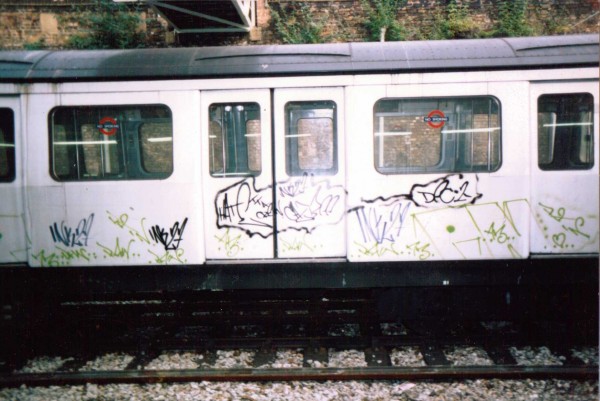
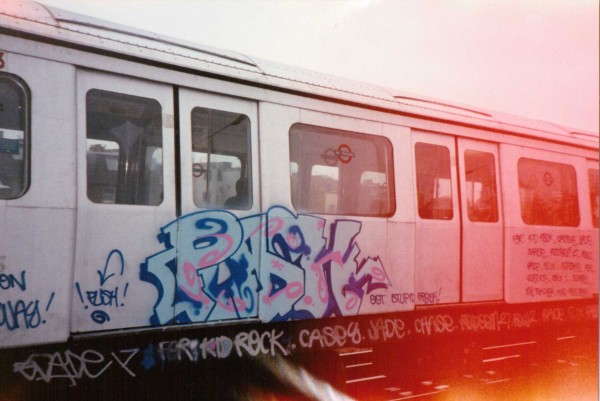
1986: Hate, Ink 27, Pain 73 (Foam) and Cazbee. West London Pioneers. Laid up at Edgware Road

In 1982 I took a subway journey in New York City. My mother’s hand closed tightly on mine, her step quickened. She was scared. Then there were the trains. Covered inside and outside, as if by one mysterious superhuman hand. The writing obeyed no rule or pattern I had ever encountered. I asked her why, but my voice was lost in her fear and the thunder and rumble of the system.

1987: Flo 2 and Snatch on the ledge at Royal Oak

I grew up in Ladbroke Grove, the birthplace of graffiti in the UK. The Westway provided unlimited concrete canvass. The first piece in London was painted there, by Futura 2000, who made a rap track with locals The Clash. Henry Chalfant took the iconic picture of the nascent London graffiti scene yards away on the Westbourne Park footbridge.


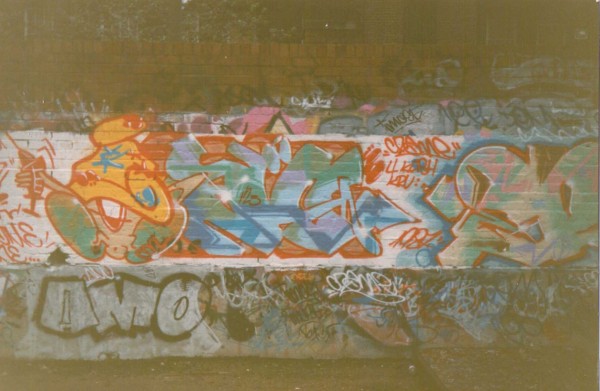
1987: Crame (Just 12, WozDoz, Demo, Cade) at Latimer Road

1988: Cazman by Cazbee at Westbourne Park

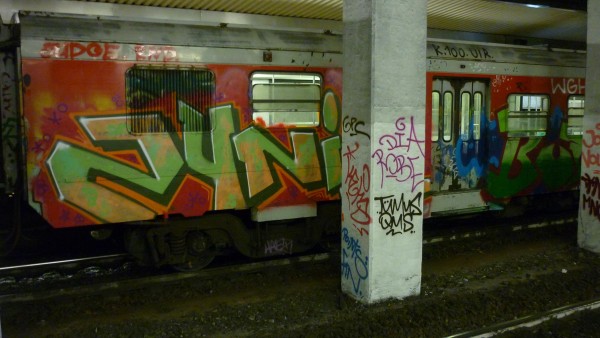
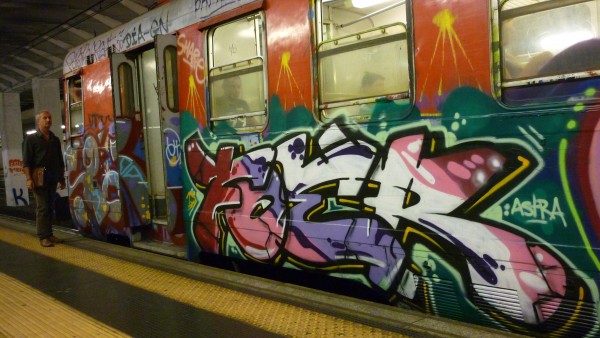
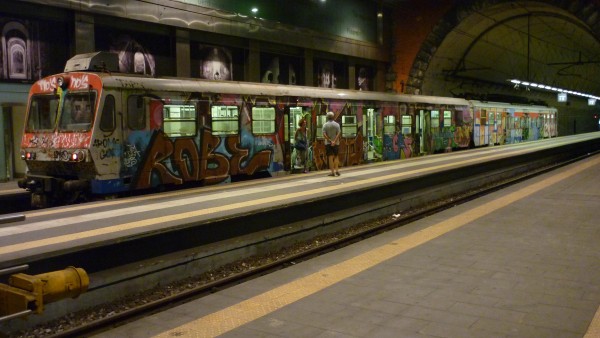
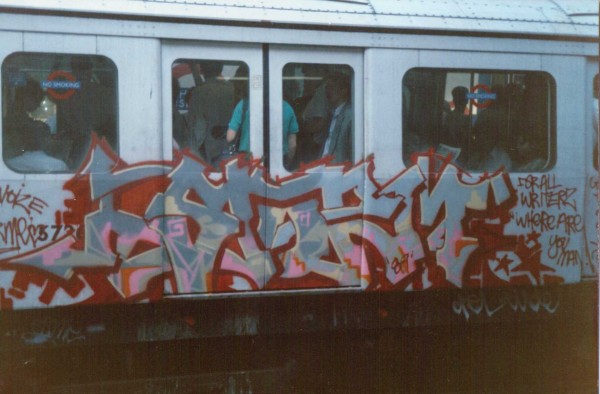
I was incompetent with paint and pens, slow to learn and bad at art. So I took photos. Graffiti was all around me, and growing in quality and quantity. My daily return journey to school offered me the opportunity to learn about everyone who was writing their names, how old they were, where they came from. The trains were a bulletin board; every journey, an adventure of discovery.


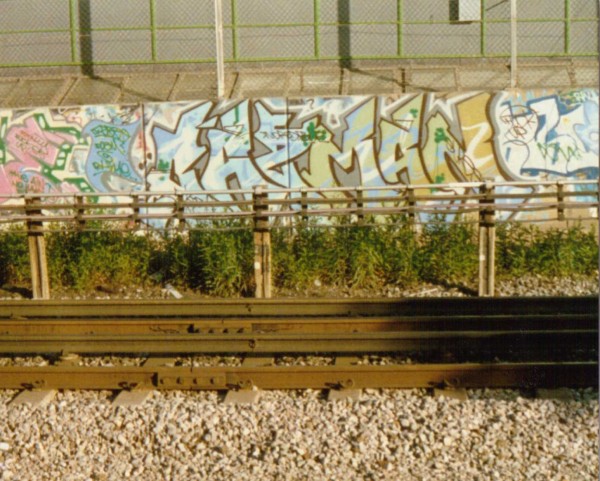
1989: Westward Ho! Push from East London rolls out of Ladbroke Grove

1989: Storm by Prime at Edgware Road

For those who participated, the inner stains remain indelible. Middle-aged men with children and jobs use their graffiti names on Facebook. Some moved on, some stayed involved. Some even manufacture and market their own paint, which they sell in their own shops. Using such paint, a new generation films itself in action, and posts the results to the internet. The act was once carried out in secrecy, with only the work remaining to be seen. Today graffiti is removed so quickly, all that remains is the act itself.

August 11th, 2011

The Four Amigos


Mauricio Hora, JR and Marc Azoulay. I’m the one behind the camera.

August 2011

June 8th, 2011

Providência Inside Out

JR has been a partner in the community since 2008, when he brought his Women Are Heroes project to our hill. When we heard about the Inside Out Project, we knew we wanted to participate. We’re at a pivotal moment in our history. While we have nothing against improvements and development of our city, we’re concerned that the authorities have not included our concerns in their plans. By pasting pictures in the community for the world to see, we’re seeking to participate and make our voices heard in this process. We want visibility, participation and recognition, and the best outcome for this community, which was built by our hands and the hands of our parents and grandparents.” (Mauricio Hora)

Morro da Providência looks over 360 degrees of Rio de Janeiro, giant emerald green papier machê mountains that drop into a city that rolls away into skyscrapers, favelas climbing up the hills, giant primordial rocks, sprawling suburbs and then the Guanabara bay and the open Atlantic. To see the city from the hilltop is to experience Rio at its dramatic, breathtaking and beguiling best.

Morro da Providência is the place where the word “favela” was first used to describe an informal urban land occupation. The name was given to the hill by soldiers returning from the northeast of Brazil where they had put down a rebellion by a mystic leader called Antonio the Counsellor. In the backlands of Bahia where the battle took place, the soldiers camped on a hill they called favela, named after a spiny, thorny shrub that made their forays through the scrubland dangerous and uncomfortable, as contact with the favela plant made their skin break out in sores and rashes. The defenders of Antonio the Counsellor, protected by leather, had no such problem, as they conducted lethal guerilla attacks on the troops, sent to defend the New Brazilian Republic.

It took four expeditions to finally defeat the rebels. The surviving troops returned to Rio de Janeiro, many with captive wives in tow, and waited by the Ministry of War, which had promised them land to live on. When the politicians failed to deliver, the soldiers and their families climbed up the hill behind the Ministry, and set up homes there. Together with freed slaves already living on the craggy outcrop, they founded the world’s first favela.


Morro da Providência (the name Providência was chosen after other settlements became known as favela too) grew and became known for its samba singers and carnival blocos (street parties) and then in the 70s when the drug trade took hold, it became one of the toughest favelas of all, and a no-go zone for people from the rest of the city.


Last year the police moved in as part of a so-called “pacification” strategy to clear armed gangs out of certain key favelas, as part of the citywide development plans in the run up to Rio’s hosting of the 2014 World Cup and 2016 Olympic Games. Providência is at the edge of the business district and overlooks the rundown port area. The authorities plan to build the Olympic Press corps building here, and have a vision of turning the port into a futuristic marina.

The precarious, perched and sometimes ramshackle construction of Providência is not popular with the authorities, and it seems like they can’t wait to get their machines up there to knock half the favela down. There are plans to build cable cars, amphitheatres and to open the area up for tourists. The plans have been drawn up with no consultation with the residents.

One day a team from the Municipal Housing Authority turned up on the hill, armed with clipboards and blue spray paint. They proceeded to number certain houses with an Orwellian acronym (SMH – Secretaria Municipal de Habitação) and inform those living inside that they were due for removal.

Some residents are not best pleased about this. As Dona Penha puts it “When things were bad, (i.e. when the favela was run by drug traffic and corrupt police) when we had to sleep under our beds at night, and walk our children past dead bodies in the morning, it was fine for us to stay here. Now things are better, we’ve got to go.”

JR’s Inside Out project was a perfect opportunity for people to show their faces. Mauricio Hora, a photographer born and brought up in Providência, took more than 100 portraits of residents that the Inside Out team printed (and hand delivered to Rio, thanks Marc!) which we pasted up with residents over three consecutive weekends.

The first day of pasting saw a visit from Raquel Rolnik, the UN Special Rapporteur on Adequate Housing, that lead to a TV appearance by Mauricio Hora, and it appears that the authorities are already changing some of their plans.

Rosiete Marinho, a community leader, says:

“We’re not invaders, we’ve been on this land for 150 years, and we have a legal right to remain. These photos represent our lives, lives that we want to maintain. We’re not a mere number.”